
Going up from feeling down
Malaise as a problem to explore

By mid-November I had been working on a decision theory writing sample for weeks and hating every minute of it. The writing was supposed to demonstrate that I could think clearly about hard problems. What it was actually demonstrating was that I could grind myself into dust.
School was no better. I was deep enough into the semester that the work had stopped feeling purposeful and started feeling like something to survive. The things I would normally retreat to when the pressure built (reading philosophy, chasing ideas that made me feel alive) had started to ring hollow. I had been reading Deleuze, but I was beginning to suspect that the draw was more romantic than real: I liked the feeling of being the kind of person who reads it more than I liked what it was actually giving me.
By the time I noticed what was happening, I was already in the pit. I was scrolling through nothing, watching things without watching them, sleeping too much. The decision theory sat unfinished. The philosophy sat unread. The days were passing and I could not find a reason to care.
The feeling is hard to name. Sadness is the wrong word, and so is laziness. It was more like the things I was doing had come unstuck from anything I cared about. I could still recite why they mattered if someone asked. The recitation was accurate. It also did nothing.
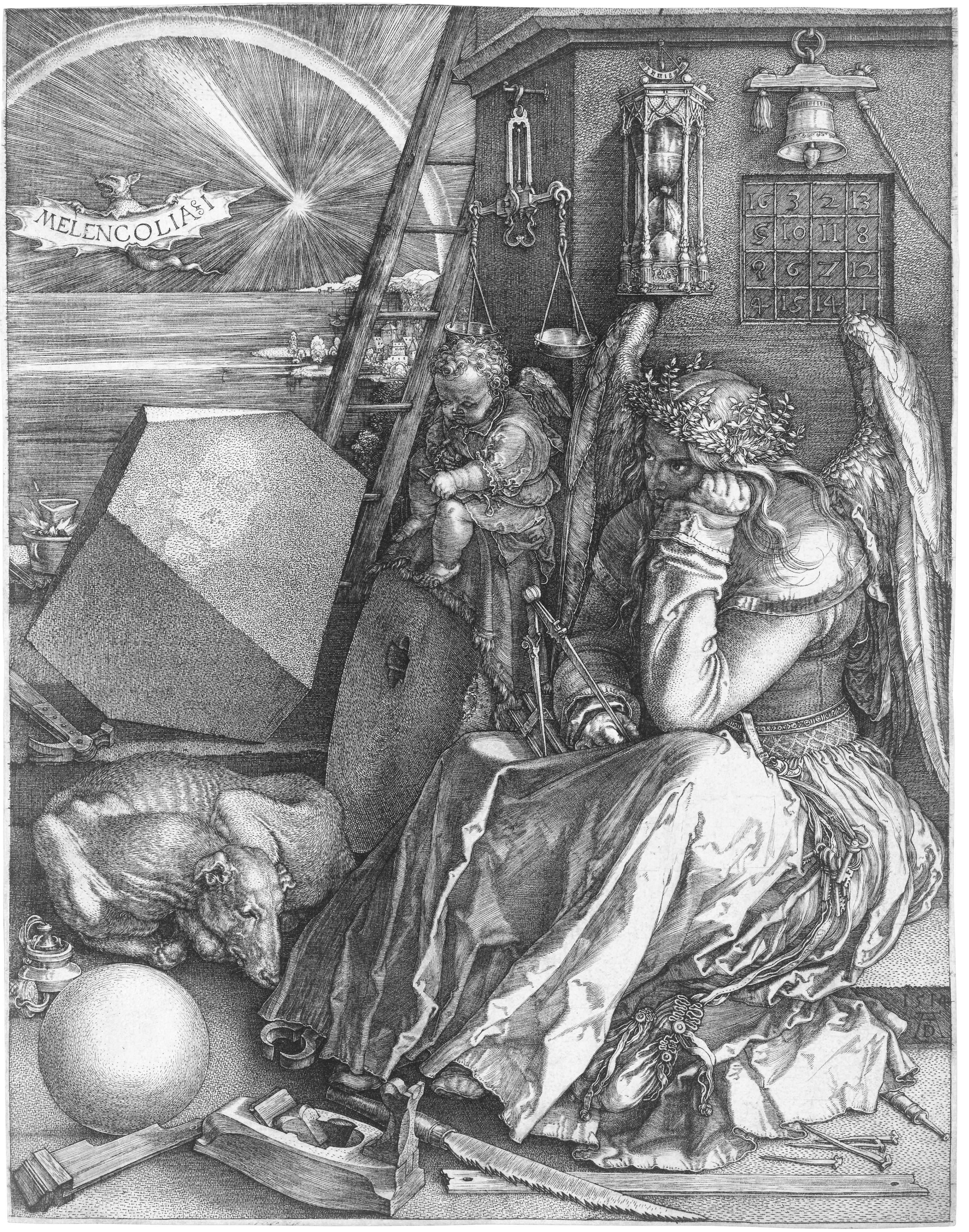
Malaise is a problem
What changed things was noticing something about the discomfort itself. I had been treating it as a condition: something wrong with me, a mood I needed to wait out or push through. But in earlier months I had been starting to conceptualize problems: how a problem is a drive, a pressure oriented toward something. Not a flaw. Not a sign something is wrong with you. An unresolved problem does not go away when you ignore it. It pushes.
The malaise was pushing. I did not know where, but it was not neutral. It was uncomfortable in a way that had direction, even if I could not see the direction yet.
So I opened Obsidian and started doing what I had been writing about for others: I started mapping.
Going up
The process is simple but slow. You take something you are doing, or something you want, and you ask: why does this matter to me? Then you ask again. And again. You follow the chain upward until you hit something that matters on its own, something that does not need a further reason. (I have written about this method in more practical terms.)
I started with what was closest. I had been trying to read Deleuze for weeks and bouncing off him. Why? Because I wanted to be inspired, to think in a way that felt creative and alive. Why did that matter? Because I wanted to feel the fire that had been burning before the semester ground it out. I wanted to feel.
That was real. “I want to feel” was not a performance. It was a genuine drive, and it had been active the whole time, pushing me toward the philosophy even as the philosophy was not actually delivering.
Then I did the same thing with the homework I had been avoiding. I think I need to do this assignment. Why? Because it matters for my grade, and I want a decent grade. Why? Because good grades keep options open, and I want options. Why? Because I want to live my life well. Why? Because I want to have lived a full life, caring for others and myself.
That one hit hard. I had completely lost sight of it. I had thought things like this before. Somehow I had still lost it. Somewhere under the grinding weight of the semester, the connection between “do this problem set” and “live a full life caring for others” had gone dark. The link was still there in reality. It had just atrophied out of my conscious thinking, which is exactly what I later came to call map atrophy.
The reversals
Here is the thing that surprised me most. Once the chains were laid out, the practical conclusions were the opposite of what my feelings had been telling me.
I had felt like I wanted to read Deleuze. But going up revealed that what I actually wanted was to feel alive, and Deleuze was not accomplishing that. It was a path I was clinging to out of inertia. What actually served “I want to feel” was the opposite of curling up with a book: working on Ganesha, being with people rather than reading about ideas alone, sitting with hard problems until something cracked. Deleuze was sedation dressed up as inspiration.
And I had felt like I did not want to do the homework. But going up revealed that the homework was genuinely connected to things I cared about—connected by a chain I could now literally see on the page. The resistance was not a signal that the work was pointless. It was a signal that I had forgotten why it mattered.
My map of what I wanted had been wrong. The deep things were still intact. I still wanted to feel alive, still wanted to live fully. What the map got wrong was the layer below: which actions actually served those things. Mapping corrected it. It showed me what I already wanted and let the practical conclusions fall out.
What I could not have predicted
Something else happened during this process that I did not expect.
As I followed the homework chain down to “I want to have lived a full life, caring for others and myself,” I suddenly realized something: I do not have to root all of my values in others. Even if I do nothing, I am still here. This was not a thought I set out to have. It surfaced from the mapping the way water surfaces from a well that has been uncovered.
I had known this before. But knowing it abstractly and having it click are different experiences. This time it clicked. And it changed the texture of everything else on the map. The connections were unchanged. What shifted was how much each one mattered.
I once wrote about how who we are is partly unknown to us. The self is something you discover by going further in. You don’t arrive at it. The mapping made that real. Your current thoughts about yourself (what you want, what matters, what is worth doing) are not the whole picture. The map can surface what your current state of mind is hiding from you, including things you could not have predicted.
The shift
Once the map clicked, things moved fast. The situation just looked different. The homework was no longer pointless drudgery: it was connected, visibly, to things I cared about. The philosophy I had been clinging to was no longer a lifeline: it was a habit I could set down without losing anything.
What I actually did: I went back to Ganesha. I spent more time with my brother. I stopped reading Deleuze and started working on the things that actually made me feel alive. None of this required willpower I hadn’t had the week before. The map made the actions obvious, and obvious actions are cheap.
I once tried to describe this kind of moment in a different register, all libraries and quiet and the sound of a life underneath the noise. That was the poetic version. The practical version is duller: open Obsidian, type what you are doing, type why it matters, keep going up until you hit something that doesn’t need a reason.
How to do this when nothing feels worth doing
A few things I would tell someone in the pit, if they asked.
The malaise itself is the problem in the technical sense — a drive pointing somewhere you have lost track of. The pole has gone dark. That is why it feels like emptiness.
You do not need to know where it points before you start. I didn’t. I started with the homework I was avoiding and Deleuze I was failing to read, asked why each one mattered, and let the structure show up as I wrote.
Write it down somewhere that is not your head. The reason you lost the chains in the first place is that working memory could not hold them. Obsidian, paper, the back of a syllabus, whatever. Outside your head is the requirement.
If the map only confirms what you already thought, you have not gone deep enough. The point is the reversals: the thing you were reaching for that turns out to be inert, the thing you were avoiding that turns out to be load-bearing.
And the map has to change what you do. A map that only makes you feel better is a sedative. The drives are still there, the pressure comes back, and you end up doing this again next month.
Closing
The pit narrows your access to what you care about until you can’t see it anymore. You have not changed; your map has atrophied.
Mapping does not give you new values. It shows you the ones you have been ignoring and lets you act on them again. In November that was the whole fix.
Written with the help of AI.
I like that the French terms cannot be translated with English words: ennui ou malaise…
I like the concepts you bring: burn out or procrastination is generally due to the lack of connection between the actions and their worth or link to values.
Love the mention